
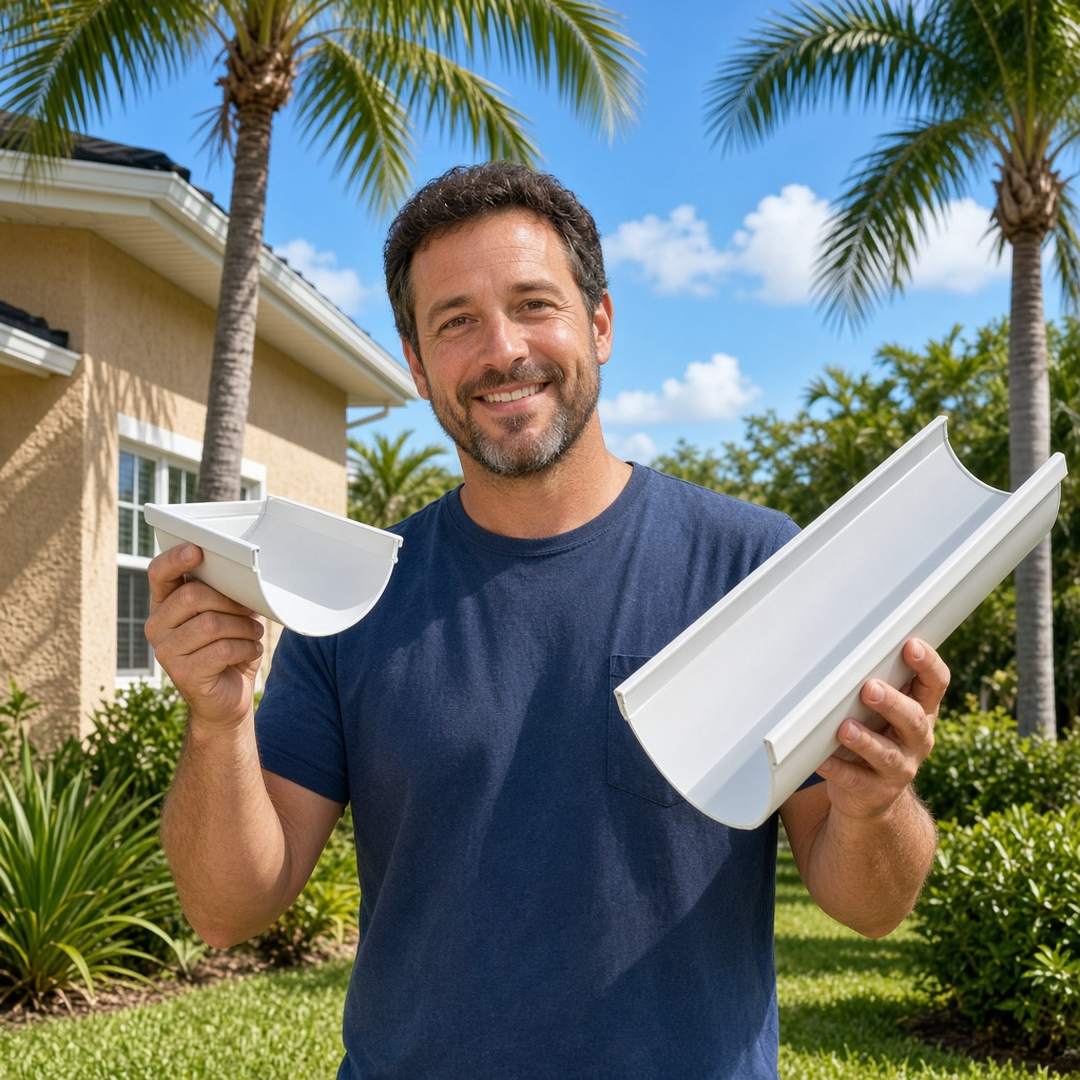
The 5-inch versus 6-inch gutter question comes down to how much water your roof sheds and how fast Palm Coast rain arrives. Most single-story homes here do fine on 5-inch K-style aluminum, but a steep roof, a large roof, or a roof with long runs feeding few downspouts often needs the 6-inch trough. Flagler County rain is heavy and concentrated — NOAA's local normals put September at 7.67 inches — so sizing the gutter to the roof is not a detail to guess at.
Here is how to think it through for a Palm Coast home.
What 5-Inch and 6-Inch Gutters Actually Change
The 5-inch and 6-inch sizes change how much water the trough can carry before it overflows. A 6-inch K-style gutter holds roughly 40 percent more water than a 5-inch, and it usually pairs with larger 3x4-inch downspouts instead of the 2x3-inch drops on a 5-inch system. More trough volume plus bigger downspouts means the system clears a sudden downpour faster.
That extra capacity matters most on roofs that dump a lot of water into a short length of gutter — steep pitches, wide roof planes, and long eaves that can only fit a downspout at each end. On those roofs, a 5-inch gutter fills and spills before it can drain.
How Roof Area and Rain Intensity Decide the Size
Roof area and rain intensity decide the gutter size together. The larger the roof area draining to a run, the more water that run must carry; the higher the local rainfall intensity, the faster it arrives. Palm Coast scores high on the second factor — its summer storms drop water in bursts, and single tropical systems have dropped multiple inches in a day, like the 5.44 inches Tropical Storm Colin left on the city.
A simple way to read it: a modest single-story roof with several downspouts is usually fine on 5-inch. A steep or large roof, or one where the gutter layout forces long runs between downspouts, leans to 6-inch. When in doubt on a Palm Coast roof that sheds fast, the larger trough buys margin for the heaviest storms.
Why Downspout Count Matters as Much as Size
Downspout count matters as much as trough size, because the downspouts are the exit. A big gutter feeding too few downspouts still backs up — the water has nowhere to go fast enough. Adding downspouts shortens the distance water has to travel along the trough to escape, which keeps the run from filling in a heavy rain.
On a Palm Coast roof, getting the downspout count right is often what separates a system that drains from one that overflows, regardless of whether it is 5-inch or 6-inch. A good installer sizes the trough and the downspouts together. If you want the size matched to your roof, seamless gutter installation in Palm Coast starts with that measurement.